Dr Mercola discusses the FDA – please watch this
Please cut and paste into your browswer
http://www.youtube.com/watch?v=ZONcV4q5O9Q






Please cut and paste into your browswer
http://www.youtube.com/watch?v=ZONcV4q5O9Q
Off to Greece again for some Vitamin D and sunshine. I’ll also be searching out some new recipes and also a potential new venture so watch this space. My August summer sale was very popular this year, so will definitely be doing that again in 2012. My workshops will start at the start of October, a slight delay due to a backlog of work so apologies for that!
Hope you are all well and see you soon x

By James LeFanu
7:30AM BST 12 Sep 2011
The pressures on many mothers juggling the demands of work and family are no doubt stressful enough. Still, it is hard to credit the report last week from the authoritative-sounding European College of Neuropsychopharmacology that, as a result, they are twice as likely to suffer from depression than 40 years ago.
It is certainly true that, astonishingly, family doctors now write three times more prescriptions for antidepressants than back in the Seventies, but that mainly reflects the success of drug companies in redefining psychological and other conditions in such a way as to encourage doctors to treat those conditions with pills.
Their methods were well reported by a New York advertising executive, Vince Parry, in a 2003 article, “The Art of Branding a Condition”, in which he described how he collaborated with several companies to foster “the creation of medical disorders”, by deploying three main strategies.
First, elevate the importance of symptoms, then redefine an existing condition, before developing “a new condition for an unmet market need”.
The several instances of this brand conditioning include “medicalising” normal physical events, redefining psychological traits as quasi-psychiatric illnesses (so shyness becomes social phobia) and, most important, redefining the limits of what is considered normal of some physiological variable such as blood pressure or cholesterol.
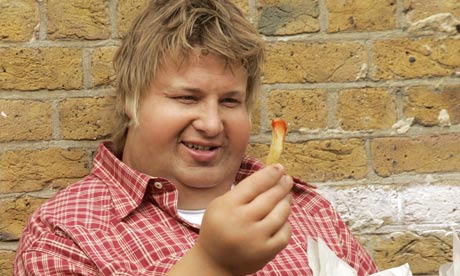
Levels of obesity across the globe are reaching epidemic proportions, according to medical experts. Now the crisis is to be the focus of a major debate at a UN medical conference in New York.
A coalition of nutrition and health experts – ranging from celebrity chef Jamie Oliver to former government chief scientist Sir David King – are urging western nations to play a key role in halting the dramatic rise in numbers of obese people across the planet.
“There seems to be a trend with developing countries wanting to follow in the footsteps of the western world, and copy their patterns of fast food and consumerism,” Oliver told the One Young World conference in Switzerland on Friday. The phenomenon was a particular problem in India, South America and the Middle East, he said. Oliver added: “Pre-packed convenience food is seen as a symbol of being ‘modern’ in developing countries, but the problems it causes are long-term, and costly.” “Diet-related diseases are two of the top five causes of premature death for people under 60 years old. They look set to create an absolute catastrophe over the next 30 to 40 years if nothing changes.”
Oliver’s aim is to encourage heads of state and the UN secretary-general, Ban Ki-moon, to “sit up and take notice” at a summit on non-communicable disease in New York on 20 September. He called for a “global movement to make obesity a human rights issue” and urged a million people to sign a petition. Oliver also urged countries to hold on to their national dishes, and for recipes to pass from generation to generation, saying: “I believe that together we can make some real noise ahead of this meeting of experts.”
The attempt to generate a global debate on the crisis is backed by King, who wrote in the Lancet recently: “We need changes in many aspects of our environment to avoid the morbid consequences of overweight and obesity. This change will require global political leadership across public policy, considerably broader than that of health policy, and far better monitoring.”
King also called for the issue to be a major focus for debate at the UN summit. “By 2050, 60% of men and 50% of women could be clinically obese,” he wrote. “Without action, obesity-related diseases will cost the UK £45bn a year. Research and action should therefore be undertaken to avoid what could develop into a massive problem, not just for the UK, but also globally.”
The danger posed by rising obesity numbers has been highlighted by the World Health Organisation (WHO). “It is not uncommon to find under-nutrition and obesity existing side-by-side within the same country, within the same community, and the same household,” it states. According to WHO, 65% of the world’s population now lives in countries where overweight and obesity kills more people than underweight. However, it is the latter problem that attracts the headlines because it poses an immediate and life-threatening danger.
“With our western-style diets, our biggest problems are a direct result of what the experts call ‘bad feeding’ – which basically means eating a load of rubbish, highly processed food that’s jammed full of salt, fats, sugars, additives, and cheap processed meats,” Oliver said. “Governments around the world like it when food is cheap and shops are full, but they’re achieving this by allowing big businesses to pump out this sort of food and drink in mass volumes.”
Several factors are blamed on the rise of obesity: these include an increase in car use, shifts away from manual labour, the rise in urban living and the availability of cheap, high-calorie convenience foods.King stressed that the current obesity epidemic was not caused by people being lazy or overeating and highlighted previous research which showed that individuals had much less choice in the matter of their weight than they would assume.
“Our biology has stepped out of kilter with society,” he said. “Most adults in the UK are already overweight and modern living ensures every generation is heavier than the last. This is known as passive obesity.”
I got asked the other night – what exactly is it that you do? It’s a very good question. I call myself a Nutrition Consultant. This is simply because my expertise is on nutrition and health. Over the years the role has changed slightly in the fact that I often liaise between patient and GP regarding tests.
A consultation takes between an hour and an hour and a half, sometimes longer. A full medical history is taken and your blood pressure is done. Then you have the chance to talk and tell me your “story” – what your symptoms are etc. Then I will ask you lots and lots of questions going through every system in your body ie do you sleep ok? do you get lots of coughs and colds? do you have split lips? do you get headaches? etc etc. You can see why we need so much time. I then make a note of all medications you are taking and any supplements, and then I look at the food diary. Often its quite simple to pull all the strings together and see whats causing what, but often you may need to go back to your GP with a letter from me asking for some more tests, or there might be a need to do some private testing. I use The Doctors Laboratory and Biolab in London. What tends to happen with our bodies is that one “thing” or food might be causing any number of symptoms which is hard to cover in a ten minute consultation with the GP.
Now for the science bit. I am not into what I call “woo woo” nonsense – I could not look consultants and GPs in the eye if I practice some of the nonsense that I have heard. What I do practice is evidence based personalised healthcare where interventions are science based and efficacy can be statistically validated.
I like to think I cut through the media nonsense, the labelling mazes that just confuse people and get back to basics. Most of the time I listen – and take time to listen to people who are ill, who are frustrated and cannot find solutions as to why they are ill. These are often labelled the “heartsink” patients – those who clog up GP surgeries with varying non urgent symptoms like “I feel tired all the time” “I feel spacey in the head” ” I ache all over like I have flu” and every other odd symptom that you could mention. To pull this all together takes time and an understanding how there are often overlapping symptoms ie those ten cups of coffee you are drinking per day may be giving you a) heartburn b) stomach cramps c) palpitations, or what about all three. Sometimes its so obvious, sometimes its not.
I remember a case in question about eight years ago, I had a lady come and see me who suffered with migraines. She had tried everything and had been having weekly injections for nearly thirty years. We left no stone unturned in the quest to find out the cause, from neck trauma to MSG. We got nowhere, but after the second consultation as she was leaving she stopped and said “Oh I suppose this wouldnt be important, I put xxxxx (an artificial sweetener)in my tea every morning and I forgot to tell you”. I asked her “How long has this been going on for”. “Oh” she said, nearly thirty years”. BINGO… and there we had it – for this lady, that was the cause of her migraines. After thirty years they stopped virtually over night.
Perhaps I should change my title and call myself Sherlock Arnold…
New article on nutrition and type 2 diabetes in www.wellbeingmagazine.co.uk.
If you and your friends are particularly interested in a nutritional topic why not create your own workshop from home. I can come and talk to you in the comfort of your own home! Subjects that may be of interest: Food and mental health; PMS and nutrition; Gut disorders, Lower cholesterol naturally!
For more information please do call on 01323 737814
20% off all consultations if booked in August.
1 hrs consultation £65 – now £52
1/5 hrs consultation £75 – now £60
Family consultation £120 – now £96
One to one shopping trip £45 – now £36
Weight loss programme not in sale!
Please contact Kate on 01323 737814 or katenut@aol.com or www.katearnoldnutrition.co.uk
I am starting classes on nutrition, food shopping, the food industry, labelling and weight loss in September – for those of you interested, please let me know and if there is anything else you would like me to cover. Classes start early September on Tuesday evenings – dates to be confirmed.
We now know that weight loss is not a one size fits all fad, its needs to be tailored to the individuals needs: these may include metabolism, what medications people are taking, financial and social conditions. When I start my Weight Loss Programme with my clients I often find there are other issues as well to be dealt with at the same time. Calorie counting and low fat diets only seem to work for a short space of time, and we now know low fat diets are not good for long term health. Calorie counting as well is to me not a justified way to lose weight long term – if I had to stick within 1,500 a day I’d save it all up and eat éclairs, wouldn’t you? What calorie counting fails to do is to educate people in a way that they can eat great food for the rest of their lives. We think of dieting as a modern phenomenon but in actual fact we can go way back to the ancient Greeks and find a generation of people fascinated by food and diet. Throughout the centuries there have been some extraordinary, weird and wacky ways of keeping the pounds off. So let’s travel back a bit in time and look at what was happening to our ancestors.
Interesting facts and quotes
“”He that dieteth himself, prolongeth his life” – Ecclesiastes
“It is very injurious to health to take in more food than the constitution will bear, when at the same time, one uses no exercise to carry off this excess” – Hippocrates (I have to say this man was ahead of his time – over and over I quote him in my writings!)
Plutarch, in 1AD, recognised the link between weight and health: “thin people are generally the most healthy; we should not therefore indulge our appetites with delicacies or high living, for fear of growing corpulent”.
Twenty years on from the Battle of Hastings, William the Conqueror grew too large to ride his horse, and decided to lose weight by consuming nothing but alcohol!.
Other historic diets include: Cheyne’s lettuce diet. Medical doctor George Cheyne, little known today, was among the most quoted men in eighteenth-century Britain. A 450-pound obese man known for his Falstaffian appetites, he nevertheless advocated moderation to his neurotic clientele. This inventor of the all-lettuce diet was also, a fellow sufferer who struggled with obesity and depression (so perhaps the lack of protein might have been a issue!)
William Banting lost almost a quarter of his weight in a few weeks by adopting a diet “low in farinaceous food” – a precursor of the modern low-carbohydrate diet. His 1863 diet book was a top-seller. Banting (1797 – 1878), was a formerly obese English undertaker who was the first to popularise a weight loss diet based on limiting intake of refined and easily digestible carbohydrates. In 1863, Banting wrote a booklet called Letter on Corpulence, Addressed to the Public which contained the particular plan for the diet he followed. It was written in the form of an open letter. Banting accounted all of his unsuccessful fasts, diets, spa and exercise regimes in his past, then described the dietary change which finally had worked for him, following the advice of a physician. His own diet was four meals per day, consisting of meat, greens, fruits, and dry wine. The emphasis was on avoiding sugar, saccharine matter, starch, beer, milk and butter. Banting’s pamphlet was popular for years to come, and would be used as a model for modern diets
The fruit and vegetable diet – around 500 BC
The Ancient Greek Mathematician Pythagoras and his followers practised one of the first recorded diets, known as vegetarianism. Although Ancient Greeks did have a penchant for the athletic look, Pythagoras’ abstinence from the heartier foods in life had little to do with becoming a perfect size ten. Vegetarianism was, in fact, the only way to ensure you were not eating your grandmother or another relative, whose soul could have transmigrated to your neighbour’s pig (remember, reincarnation was a popular belief in the Ancient world). The great mathematician was so passionate about his diet that he is said to have met his death defending a bean field.
Vomitorium vulgaris – around 45 BC
Romans in the time of Caesar had special rooms in which to expel their feasts, but this was for the sake of gluttony rather than wanting to be thin. They would purge between courses to make room for every dish on offer.
1 AD-2000 AD: The Jesus Diet
One of the oldest diets in history – if you believe the Jesus diet website (www.jesusdiet.com). The proponents of this eating regime claim that almost all diseases and pains can be healed by prayer and fasting. You are only allowed to eat raw food (excluding meat) and, even then, dine only twice a day at the most. These two meals have to be restricted to one or two pounds (there seems to be no biblical justification for this restriction, however). To top it off, fasting completely for at least one day a week is recommended. The rationale being that if you have the energy to feel anything at all (including pain) after eating like this, then you must truly be touched by the Lord.
Bulimia or ox-hunger in the middle ages
Some say bulimia, curiously called ox-hunger long ago, first began in the Middle Ages. People at celebrations gorged on food and then induced purging through vomiting. Like the Romans, this early form of bulimia was not motivated by a desire to be slim for fashion’s sake. Instead, eating a lot is believed to have been a sign of wealth and status.
Feverless consumption or hysteria – 1800’s
This was thought to be a Victorian form of anorexia, ‘hysteria’ sweeping through the middle classes and the Aristocracy of Western Europe and North America during the second half of the nineteenth century. Literally starving oneself was believed to be the fastest way to embody the Victorian fad of frailty, which was associated with spiritual purity and femininity. I noticed this while watching the recent excellent BBC2 production of the crimson petal and white. At that time, the aristocracy romanticised people who had tuberculosis, or consumption.
The Mega-Bite Diet – 1910
Horace Fletcher, an american art dealer, earned his title, ‘The Great Masticator’ – a reference to animals that ‘chew the cud’ – through his publication of a best-selling diet book. In it, he recommended chewing each mouthful at least 32 times until it became a thin, liquid paste, and that any food that couldn’t be broken down to a gruel consistency had to be spat out. Fletcher claimed to lose 65 of his 217 pounds through his remarkable method.
1920’s-2000s: The Hollywood, 18-day Diet or Grapefruit Diet
The 1920s saw the emergence of glamorous flappers as the feminine ideal. In an effort to achieve this slim, hipless, flat-chested look, women tried the Hollywood, 18-day, or Grapefruit diet (which is still around today). The premise is to consume only 800 calories a day through eating barrels of ‘fat-burning’ grapefruits so as to kick-start your metabolism. The only plus: you can have as much black coffee as you like. And please please do not try this – it’s very unhealthy.
The Tapeworm Diet – 1920’s to date
Advertisements for tapeworm pills first emerged in the 1920s. Since then, a number of famous women are alleged to have tried this revolting eating plan. The tiny parasite lives in the intestine of the host, helping to consume her food. The result: you are hungry all the time but still able to remain rail thin , however much you eat. One urban myth that circulated during the early eighties claimed that a woman taking a ‘miracle diet pill’ lost such an alarming amount of weight in just a few weeks that her doctors decided to find out what was causing this and when they opened these mysterious pills to investigate the contents, they were greeted by the head of a tapeworm.
The Bland Diet – 1930’s
This plan was advocated by American Presbyterian minister, Sylvester Graham, who was nicknamed ‘Dr Saw Dust’. Bland foods such as crackers and dry bread were favoured over meat, spices and stimulants because it was argued that the spirit would grow strong only through denial of the flesh. He felt that resisting these luxurious foods would eventually encourage restraint in people’s sexual and social behaviour. Graham developed a band of supporters across the U.S., but his diet soon lost popularity when devotees became too weak and ill. However its interesting as we use the phrase eat a bland diet if someone is recuperating after an operation or has just had a stomach bug.
1980s – 2000s: The breatharian diet (also known as the air and sunlight diet)
The Bretharian Institute of America (www.breatharian.com) explains their philosophy in this statement: ‘When humans reach the purest sense of harmony with the surrounding world as well as a complete understanding of each individual’s role as a function of God to create the universe, they will have reached a vibrational frequency on this material plane, where they no longer require food, water or sleep’. Ellen Greve, an Australian who practices this particular brand of madness, has 5,000 disciples and charges more than £1000 per ticket for her seminars, where she attempts to liberate people from the ‘drudgery of food and drink’.
The Atkins Diet – 1970’s to date
A whole host of celebrities from Nigella Lawson to Renee Zellweger embraced the the carb shunning, protein heavy diet as did the public. The Atkins Diet books hit the top spot in best sellers lists everywhere and although the diet suffered a minor blip when Dr Robert Atkins died, after slipping on a icy pavement in NY it remains popular, although the GI (Glycemic Index) diet seems to have now claimed the top spot.
Dieting today:
Cabbage Soup Diet
Weightwatchers
Lighterlife
Sureslim
Slimfast
Rosemary Conley
South Beach Diet
Eat Right for your Blood type
GI/GL Diet
Cambridge Diet
The Grapefruit Diet
Only eating eggs diet – Charles Saatchi
The Atkins Diet
Jenny Craig – meals bought to your door
The Dukan Diet
The Hay diet
Macrobiotic diet
The Scarsdale diet
7lbs in 7 days etc
So how do you lose weight:
Eat less exercise more? Oh if it were only that simple. You find a way of eating that you can continue for the rest of your life, and therefore it will not be a “diet”. And it is about carbs, but its not about fat! A tailor made programme for your own personal needs is the way to go and not a diet in sight – as we know diets don’t work. As soon as you stop you put the weight back on and this is why todays diet industry is worth 40-100 billion dollars in the US (yes its big business) and over £2billion in the UK and 95% of slimmers regain the weight.
@katearnoldnutrition
© 2026 Kate Arnold Nutrition
All Rights Reserved