




Kate Arnold Nutrition

Search Blog Posts
Just in case you forgot…..
This incredible lecture by Dr Robert Lustig on sugar. This is everything you need to know about obesity and politics in one shot.
Someone give him a global knighthood
April newsletter – Everything you need to know about lactose intolerance
 As some of you are aware I was diagnosed as lactose intolerant about 17 years ago. It took six years to get a diagnosis in the days when I knew nothing of nutrition and health! In the last ten years I’ve seen a surge of lactose and fructose intolerance patients that are mistakingly diagnosed with IBS. Without the proper test, diagnosis, treatment or diet strategy, the symptoms wont necessarily go away. I suspect many people diagnosing themselves with “allergies to dairy” could in part be lactose intolerant. To understand what exactly is going on we need to look a bit deeper as many of you are confused! One thing is for sure try not to diagnose yourself as this area is a minefield of mis-information.
What is Lactose intolerance?
The ancient Greek physician Hippocrates (born 460 B.C.) first noted gastrointestinal upset and skin problems in some people who consumed milk. However, it has only been in the last few decades that the syndrome has been more widely described by modern medicine. Lactose intolerance is the inability to metabolize the sugar found in milk and dairy products. This is due to a lack of the enzyme lactase. Most adults in northern Europe and North America are able to absorb lactose. However, the majority of the world’s population are lactose intolerant, and as we get older our ability to digest lactose lessens. Globally a staggering 70 per cent of adults are lactose-intolerant (Gastroenterology, 1971; 61: 805-13).
Babies’ bodies make lactase so they can digest milk, including breast milk. Premature babies sometimes have lactose intolerance. Children who were born at full term usually do not show signs of lactose intolerance until they are at least 3 years old. Lactose intolerance can begin at different times in life. In Caucasians, it usually affects children older than 5 yrs old. In African Americans, lactose intolerance often occurs as early as 2 yrs old. Lactose intolerance is more common in people with Asian, African, Native American, or Mediterranean ancestry than it is among northern and western Europeans. Approximately 30 million American adults have some amount of lactose intolerance by 20 yrs old.
What are the symptoms?
Without lactase, lactose cannot pass through the gut wall into the bloodstream. This accumulation of undigested sugar causes gut bacteria to switch to lactose metabolism, resulting in abdominal symptoms such bloating, flatulence, cramps and, sometimes, diarrhoea. Symptoms often occur 30 minutes to 2 hours after you eat or drink milk products.
Causes
Bowel surgery
Infections in the small intestine from viruses or bacteria which may damage the cells lining the intestine
Intestinal disorders like coeliac disease
Children weaned in non diary consuming societies
A genetic disorder from birth – usually diagnosed in early infancy
Lactose tolerance tests
You can simply avoid eating foods that contain lactose for a couple of days and then drink two to three glasses of milk. If you get stomach ache or diarrhoea within half an hour, you might be lactose intolerant. If you would like it confirmed than the tests available are:
 The lactose tolerance test.
Your doctor/consultant measures your blood sugar levels before and after you drink a liquid containing lactose. The lactose tolerance blood test looks for glucose in your blood. Your body creates glucose when lactose breaks down. For this test, several blood samples will be taken before and after you drink the lactose solution described above.
Stool ph.
If the stool is acidic this can inidcate an infection of e. coli or lactose intolerance. This is done with children born with the condition.
The hydrogen breath test
This is the preferred method. It measures the amount of hydrogen in the air you breathe out. You will be asked to breathe into a balloon-type container, or gastrolyzer. Then, you will be asked to drink a liquid containing lactose. Samples of your breath are collected at set time periods and the hydrogen level is checked. Normally, very little hydrogen is in your breath. But if your body has trouble breaking down and absorbing lactose, breath hydrogen levels increase. There can be issues with getting this test on the NHS as it’s quite expensive and it won’t necessarily be the first test your GP will use to diagnose your symptoms.
If you’re having problems getting this test in your area, I’ve teamed up with Dr Adam Harris, Consultant Gastroenterologist who does breath tests including lactose, fructose and SIBO. For more details go to his website: www.westkentgastroenterology.com.
Where do I find lactose?
Lactose is also a commercial food additive used for its texture, flavour and adhesive qualities, and is found in foods such as processed meat, sausages, sliced meats, pates, gravy stock powder, margarines, sliced breads, breakfast cereals, processed foods, medications, pre-prepared meals, meal replacements (powders and bars), and protein supplements (powders and bars). A comprehensive list includes all these ingredients:
Avoid
Butter
Butter Oil
Calcium caseinate
Casein
Cheese
Cream
Demineralised whey
Lactalbumin
Milk powder
Skimmed milk powder
Milk solids
Non fat milk
Non fat milk solids
Sodium caseinate
Sweet whey powder
Whey
Whey protein concentrate
Whey Solids
Ammonium caseinate
Caramel colouring
Caramel flavouring
Dried milk
Dried milk solids
Hydrolysed casein
Hydrolysed milk protein
Lactoferrin
Magnesium casein ate
Potassium casein ate
Rennet casein
NB: nearly all prescription medication has lactose in from senna tablets to painkillers. If you are lactose intolerant and are needing daily medication its worth talking to your GP or pharmacist and see if there is another option.
C an I supplement with Lactase?
When lactose avoidance is not possible, or on occasions when a person chooses to consume such items, then lactase supplements may be used. Lactase enzymes similar to those produced in the small intestines of humans are produced industrially. The enzyme, β-galactosidase, is available in tablet form in a variety of doses, without a prescription. Unfortunately, too much acid can denature it, so it needs to be taken on an empty stomach. Lactase supplementation may have an advantage especially in children where the avoidance of all dairy food might be difficult. However personally for me, I’ve never found this affective in adults although this is about personal choice and what works for you.
So what’s Casein?
Casein (from Latin caseus “cheese”) is the predominant phosphoprotein in dairy food and accounts for nearly 80% of proteins in cow milk and cheese. It has been documented to break down to produce the peptide casomorphin, an opioid that appears to act primarily as a histamine releaser. One theory is that this casomorphine aggravates the symptoms of autism. Autism is complicated and is never caused simply by one problem but generally parents feel their children respond better to a casein free diet. As casein has a molecular structure that is quite similar to that of gluten, some gluten-free diets are combined with casein-free diets. Casein is often listed as sodium caseinate, calcium caseinate or milk protein. These are often found in energy bars, drinks as well as packaged goods.
What can I eat?
If you cannot eat dairy food for whatever reason you will need to look for alternatives. Twenty years ago it was difficult finding substitutes to milk products but now all supermarkets stock a good range of soya products – go to www. alprosoya.co.uk.
Soya products are low in cholesterol, trans fat and high in omega 3, 6, and 9 and help lower serum cholesterol. Rice dream and oat milk are also available in some supermarkets and health food shops if you don’t like the taste of soya. Goat, sheep and buffalo products can sometimes be tolerated better than cows milk, however please note they still contain lactose – many of you are getting confused and thinking it’s just cows milk – its not!. Lactose free milk, yoghurt and cheese are now widely available – go to www.lactofree.co.uk for more information.
Most people with low lactase levels can drink 2 – 4 ounces of milk at one time (up to one-half cup) without having symptoms. Larger (more than 8 oz.) servings may cause problems for people with lactase deficiency. However as its so individual it will differ from person to person – I can eat organic butter and feta cheese – I’ve no idea why but I can and that makes life a lot easier for me!
These milk products may be easier to digest
Buttermilk
Fermented milk products, such as yogurt (particularly organic ” live” yogurt)
Goat’s milk
Ice cream, milkshakes, and aged or hard cheeses
Lactose-free milk and milk products
Soy formulas for infants younger than 2 years
Soy or rice milk for toddlers
If for whatever reason you are omitting dairy foods from your diet you will need other sources of calcium, so i you use soyal milk, do choose the calcium enriched soya milk. In order of greatest first here are some calcium rich foods to incorporate into your diet. You need 1,200 – 1,500 mg of calcium each day:
 Calcium sources:
Whitebait
Canned sardines
Tofu
Black beans
Pinto beans
Spring greens
Molasses
Raw spinach
Sesame seeds
Prawns
Baked beans
Canned pilchards
Chickpeas
Shrimps
Canned salmon
Almonds
How do we live to 100?
Please read this great article by Max Pemberton about getting to 100….below is a section of the article on famous people seeing out their century. http://www.telegraph.co.uk/health/wellbeing/9179398/What-are-the-chances-this-baby-will-live-to-100.html
 Lovers of life
Wisecracking comedian Bob Hope reached the 100 mark in 2003, and died a few weeks later. “I’m so old, they cancelled my blood type,” he once joked. The British-born star was as physically active as he was quick-tongued. A voracious womaniser, Hope was also a fanatical golfer, playing well into his nineties. Whatever his secret, it was clearly infectious. His wife Dolores lived to 102.
The late Queen Elizabeth, who lived to 101, cheerfully broke the medical rules, consuming, according to some estimates, 70 units of alcohol a week – five times the recommended number for a woman. Her favourite tipples included gin, Dubonnet, claret and champagne. She was famous for her sense of mischief, led a busy social life, and relaxed by reading PG Wodehouse novels.
The oldest centenarian whose birth date has been reliably documented was a Frenchwoman, Jeanne Calment, who died in 1997 at the age of 122 (and therefore qualifies as one of the world’s few supercentenarians – people who have lived beyond the age of 110). She attributed her own longevity to the copious amounts of olive oil she poured on her food. She kept active and cycled into her nineties, but also had her fair share of vices. She drank port, consumed a kilogram of chocolate a week, and smoked, in moderation, until she was 117.
One centenarian who gleefully confounded medical opinion was the American comedian George Burns, who died in 1996, shortly after his 100th birthday. Burns smoked between 10 and 15 of his trademark cigars a day, often accompanied by a martini. He dedicated one of his books to “the widows of my last six doctors”.
Creatures of habit
Christian Mortensen, who died in California in 1998 aged 115, summed up the secrets of his longevity as “friends, a good cigar, drinking lots of good water, no alcohol, staying positive and lots of singing”. A former milkman and factory worker, he had a mainly vegetarian diet and boiled all his water.
The Japanese centenarian Tane Ikai had a diet of stultifying monotony that would have tried the patience of a saint. On a typical day, she ate three meals of rice porridge. But it did the trick. Ikai pegged out in 1995, at the age of 116.
Great-great-grandmother Ada Marley, from Oxfordshire, who turned 100 in January, combines an abstemious lifestyle with an active mind: “I have never smoked or drunk, but I have kept myself busy with things like needlework and embroidery.” She keeps herself mentally alert by doing a crossword or word puzzle every day.
Minnesota railway clerk Walter Breuning, who died in 2011 at the age of 114, practised callisthenics (a type of exercise to increase body strength) daily almost until his death. His diet consisted of a large breakfast followed by smaller meals later in the day. In old age, he skipped his evening meal altogether and ate fruit instead.
Natural-born survivors
The German film-maker Leni Riefenstahl, notorious for her Nazi propaganda films in the Thirties, was also renowned for her stamina and physical resilience. She survived a helicopter crash at the age of 100, and was still a keen scuba-diver when she died in 2003, at the age of 101.
One of the last survivors of the First World War, Henry Allingham was briefly the oldest man in the world before his death in 2009, at the age of 113. As well as witnessing the horrors of war, he suffered two nervous breakdowns, but he remained upbeat. He jokingly attributed his longevity to “cigarettes, whisky and wild, wild women”.
Another man to weather an inauspicious start in life was the songwriter Irving Berlin, whose family fled Russia during the pogroms of the late 19th century. The composer of White Christmas was a workaholic, often making do with very little sleep, and was prone to bouts of depression; but he passed the century mark in 1988, shortly before his death
So can we make any conclusions about living to see 100. Its clearly multifactorial: great genes, a diet high in good oils, a great outlook, positive mental attitude and perhaps also hard work and keeping the brain active. Your thoughts and stories on people you know you have reached this age?
My grandmother lived to 98 and my grandfather 96. My grandmother wasnt a worrier – she thought it a waste of time, she had a very good sense of humour, worked incredibly hard bringing up three children with little money. She was active, drank guinness, ate watercress, cranberry juice and free range eggs. As far as I can remember she only an underactive thyroid. The link to those that live to that great age – well they seem to aspire to a great mental attitude as much as possible, alcohol, and having fun… perhaps I’m in the wrong job! and here’s Des – amazing at 80!
http://www.dailymail.co.uk/tvshowbiz/article-2124281/Des-Ive-drunk-1952.html
The “dangers” of red meat
Red meat is getting a bad press again. This new study is by the Harvard School of Medicine, which took 28 years to complete and involved 120,000 healthcare professionals being monitored regarding their health and diet. The results in a nutshell are: if you add a single portion of red meat to your daily diet you could increase your risk of dying by 13%, and if its processed meat – that level soars to 20%. What concerns me about this is that people have not really been told the important facts of what red meat actually does, its health benefits and health cons. Can Harvard School of Medicine be 100% sure that all this meat was free range or organic or have these healthcare professionals been eating pink slime for 28 years. If this is the case no wonder their life expectancy has been reduced.
If we live on chicken, fish and nuts, our iron levels and even to a certain extent our vitamin B12 levels may be reduced. I don’t see anybody telling people, that if they cut out red meat, to incorporate offal in their diet, or eat pots of marmite and bovril. Eating meat regularly could possibly aggravate conditions affecting the bowel, arthritis, gout, heart disease etc. We know 150 years ago that high meat eaters and port drinkers ended up with inflammatory conditions. Today we don’t drink port as our staple liquid through the day because we can safely drink the water, and our diet is less acidic. If you do not eat meat or are thinking of cutting meat out of your diet – that is your choice, but be careful to get iron and vitamin B12 in other foods. My view on this: if you love red meat, make it organic, or as free range as possible and eat once a week. If you have heart disease, high blood pressure, inflammatory bowel disease, then by all means think again. Good sources of B12 are: Mackeral, Sardines, Crab, Tuna, Soya Milk, Eggs, Cheese and marmite. Good iron sources are: Cocoa powder, tomato paste, lambs liver, mussels, wholewheat pasta, dried apricots, baked beans. All this is written from someone who hasn’t eaten red meat since she was 15 yrs old, for no other reason, than I didn’t like the taste!
Are you tired of feeling tired all the time ? – why it could be your thyroid.
 Welcome to my March Newsletter
March usually brings breezes loud and shrill but I’m writing this newsletter looking out onto a very warm spring day, after spending the morning on the beach! Those awful months of January and February are now firmly behind us and although March can be unsettled weather wise we have much to look forward to.. the clocks go forward (hoorah!) this month and even though we lose an hour of sleep we have 210 extra hours of sunlight and that has got to be a bonus!
Before we bounce in summer I know some of you are struggling (or know someone struggling) with fatigue and odd vague symptoms so this months newsletter is on the thyroid gland. I’m seeing an abundance of people having been undiagnosed or diagnosed with hypothyroidism. Let me explain that comment in more detail later. This gland is vital to our overall health and can cause problems in all of us, men and women and at any age. When its not working properly the list of symptoms can be daunting. Last year I saw a 25 yr old woman, her parents and siblings were all hypothyroid. She had all the symptoms as well but her blood test was borderline. It took another six months for a positive test to show. By that time she was well into the symptoms of fatigue, puffy eyes and feeling the cold. If this sounds like you, a family member or friend, read on….
Why is the thyroid gland important?
The thyroid gland lies in front of the neck between the voice box and the skin. The entire gland weighs less than an ounce. Despite its small size its an extremely important organ which controls our metabolism and is responsible for the normal working of every cell in the body. It achieves this by making the hormones thyroxine (T4), and triiodothyronine (T3) and secreting them into the bloodstream. In healthy people the amounts of T3 and T4 in the blood are maintained within narrow limits by TSH which is secreted by the anterior pituitary gland. If your GP suspects that you may have an under active thyroid they will send you for a blood test. High levels of TSH mean you have an under active thyroid. You will then need to take thyroxine, and your blood will need to be monitored as its not easy getting the right amount – it’s certainly not a one size fits all situation.
The typical (but not necessarily accurate) type of person to get this condition is female, overweight and over forty. However that is too specific. I’ve seen many underweight people who have under active thyroids in their late 20’s and 30’s. If you are having trouble losing weight, feel the cold a lot and feel tired, its worth asking your GP for a test. I have listed most of the symptoms below, but the list is far longer and the symptoms can be strange and vague e.g. the fatigue has been described as “feeling drugged”. Unfortunately the thyroid blood test is notoriously unreliable as the thyroid secretions change, so you might need several tests to get a positive result. If your blood tests come out positive your GP will usually leave it a month or two and do another one just to make sure. You are measuring your TSH level and often you can be borderline and then normal several months later. There is a strong hereditary link to this condition – all my family have hypothyroidism and at the moment my results are borderline.
 What are the symptoms of an under active thyroid?
* Cold hands and feet * Tendency to feel the cold * Fatigue, especially in the morning* Depression * Dry Skin * Headaches * Constipation * Loss of hair * Aching in the joints * Muscle cramps in the feet at night * Swollen eyelids (especially in the morning) * Swelling of hands and feet * Heavy periods * Loss of libido * Brittle nails * Difficulty swallowing * Elevated cholesterol * Hoarseness *Low blood pressure * Inability to concentrate * Poor memory* Slow heartbeat (bradycardia) * Weight gain.
How is it diagnosed?
The conventional approach to diagnosing hypothyroidism revolves around the measurement of thyroid blood tests, primarily the TSH test. If the TSH is elevated, the pituitary gland is sensing a low thyroid hormone level in the body and TSH is being secreted in order to stimulate the thyroid gland to produce more thyroid hormone. If the TSH is normal many doctors believe that automatically rules out a hypothyroid state. The reference ranges are:
TSH normal range 0.4 – 4.5 mIU/L
TSH Hypothyroid > 4.5mIU/L
So what’s the problem with the TSH test?
There are several schools of thought regarding the validity of the TSH – this is just one of those. The TSH blood test has been the gold standard in conventional medicine for over 30 years. When TSH values fall above this range i.e. >4.5 mIU/L a diagnosis of hypothyroidism is given. When this reference range was established it included approximately 95% of the population. Therefore 5% of the population fell outside this range and therefore could be classified as having a thyroid disorder. In the Colorado Thyroid Study researchers believed that the true incidence of hypothyroidism was higher than 5%. Dr AP Weetman, professor of medicine wrote in the BMJ:
“Even within the reference range of 0.5 – 4.5 mIU/L a high thyroid stimulating hormone concentration ie > 2 mIU/L was associated with an increase risk of future hypothyroidism. The simplest explanation is that thyroid disease is so common that many people predisposed to thyroid disease are included in laboratory references which raises the question whether thyroid replacement is adequate in patients with thyroid stimulating hormone levels > 2 mIU/L. The high frequency of overt and subclinical hypothyroidism observed raises another contentious issue – namely whether screening for hypothyroidism is worthwhile”.
Before you all get too excited, I did say this was one school of thought, but I do know quite a few GP’s who feel the same and feel restricted in what they can do when the test is borderline or the patients symptoms are severe. Over 30 years ago Dr Barnes wrote about the inadequacies of solely relying upon blood tests in: Hypothyroidism The Unsuspected Illness. Dr Barnes agreed that lab testing could not be the sole judge of whether there is hypothyroidism present or not. He wrote “all commonly used lab tests for thyroid function leave much to be desired. They are useful in some but not all cases, and they are no substitute for a good physicians knowledge of what thyroid deficiency can bring about and his expert clinical impression of what it may be doing in the case of an individual patient”.
There is great controversy in conventional medicine about what the normal TSH range should be set. There are many doctors and organizations who believe the upper limit of the TSH range should be lowered from 4.5 – 3.0 mIU/L. This small change may result in a doubling of the numbers of individuals diagnosed as hypothyroid. Some people may do better at a TSH of 1.0 while another may do better on 3.0. It is also important to check more than just the TSH test. T3 and T4 levels are also important. Its common to see patients who have normal T4 and TSH levels and low T3 and may therefore have the symptoms of hypothyroidism. Many people do not convert T4 to T3 and might well be hypothyroid even though the TSH falls within the normal range.
Don’t get me wrong, blood tests are important but for some conditions, we could wonder how relevant they are. So many people have clear blood tests but are still symptomatic (and this goes beyond hypothyroidism) and if its not “in their heads”, which it often isn’t then there is something else going on.
Factors that may cause inability to convert T4 to T3
Nutrient deficiencies : * Chromium * Copper * Iodine * Iron * Selenium * Zinc * Vitamin A * Vitamin B2 * Vitamin B6 * Vitamin B12. Medications: * Beta Blockers * Birth control pills * Oestrogen * Lithium * Steroids. Diet: * Soy * Cruciferous vegetables. Other: * Aging * Alcohol * Diabetes * Obesity * Stress* Surgery.
What to do next?
If you have the above symptoms and/or have a family history of hypothyroidism, go and get your TSH tested. If there is a family history, ask for T3, T4 and thyroid antibodies as well. If the test comes back borderline, discuss this with your GP in more detail and ask for another test in a few months time. In the meantime concentrate on your diet (see below) and get as much exercise as you can. Make sure you are not deficient in any of the above vitamins and minerals and get expert personalised help if you are still having problem – this can be with a nutritionist.
Diet tips for hypothyroidism
If you thought diet had nothing to do with an underactive thyroid think again: The key is adopting a diet that is rich in whole foods, including plenty of vegetables, fruits, lean meats and whole grains like brown rice, quinoa or barley instead of wheat based products. These foods typically nourish the body and provide plenty of natural vitamins and minerals.
Avoid excess sugar and refined foods. Too much sugar can cause weight gain, but especially in someone with hypothyroidism. Typically, eating too much sugar results in the body creating too much insulin. This means your body is not able to use its own fat for energy, so any carbohydrates and other molecules you eat are stored as fat, so you find it hard to shift excess weight.
Someone with hypothyroidism is much more likely to end up exhausted, fatigued and hungry for longer-periods of time when they are not eating correctly. So eat several small meals during the day instead of three larger ones. This helps maintain a steady level of energy and provides the body with a steady source of constant fuel and also helps to improve metabolism.
If you are not doing so already, begin a moderate exercise regime to boost your metabolism.
An under active thyroid may increase your risk of a heart attack, so take nutritional steps to make sure your heart is healthy. Keep an eye on your cholesterol – raised cholesterol levels can be a sign of hypothyroidism rather than an unhealthy diet and lifestyle.
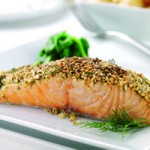 Foods that support thyroid health
1. Seafood, like sushi and seaweed, which contain iodine to support the thyroid gland. But also fish for its essential fatty acids content (Omega 3’s) that assist with weight loss, reducing inflammation, and the production of hormones.
2. Green tea, which can help support the metabolism.
4. Lean meats and fish which contain tyrosine, thought to help boost thyroid hormone production.
5. Foods rich in selenium, a mineral that supports the thyroid and immune system for those suffering Hashimoto’s disease (an auto-immune based thyroid condition). These include brazil nuts and salmon.
6. Eat in moderation (as they can suppress the thyroid function): Broccoli, Brussels sprouts, cabbage, kale, mustard, greens, peaches, pears, radishes, spinach and turnips.
7. Eat zinc rich foods such as almonds, tofu, chicken, turkey and pumpkin seeds. 
If you are putting on the pounds due to an underactive thyroid, it can be a tough call to lose the weight – if you would like some personalised help with this then do contact me on 01323 737814.
Whats really happening with heart disease…
Thought this might interest some of you. Dr Lundell is a heart surgeon. Inflammation is KEY to many chronic and acute diseases – and you will be hearing more of this soon in the media so hang on to your hats.
Heart Surgeon Speaks Out On What Really Causes Heart Disease Dr. Dwight Lundell
PreventDisease
Thu, 01 Mar 2012 21:58 CST
© n/aWe physicians with all our training, knowledge and authority often acquire a rather large ego that tends to make it difficult to admit we are wrong. So, here it is. I freely admit to being wrong. As a heart surgeon with 25 years experience, having performed over 5,000 open-heart surgeries, today is my day to right the wrong with medical and scientific fact.
I trained for many years with other prominent physicians labelled “opinion makers.” Bombarded with scientific literature, continually attending education seminars, we opinion makers insisted heart disease resulted from the simple fact of elevated blood cholesterol.
The only accepted therapy was prescribing medications to lower cholesterol and a diet that severely restricted fat intake. The latter of course we insisted would lower cholesterol and heart disease. Deviations from these recommendations were considered heresy and could quite possibly result in malpractice.
It Is Not Working!
These recommendations are no longer scientifically or morally defensible. The discovery a few years ago that inflammation in the artery wall is the real cause of heart disease is slowly leading to a paradigm shift in how heart disease and other chronic ailments will be treated.
The long-established dietary recommendations have created epidemics of obesity and diabetes, the consequences of which dwarf any historical plague in terms of mortality, human suffering and dire economic consequences.
Despite the fact that 25% of the population takes expensive statin medications and despite the fact we have reduced the fat content of our diets, more Americans will die this year of heart disease than ever before.
Statistics from the American Heart Association show that 75 million Americans currently suffer from heart disease, 20 million have diabetes and 57 million have pre-diabetes. These disorders are affecting younger and younger people in greater numbers every year.
Simply stated, without inflammation being present in the body, there is no way that cholesterol would accumulate in the wall of the blood vessel and cause heart disease and strokes. Without inflammation, cholesterol would move freely throughout the body as nature intended. It is inflammation that causes cholesterol to become trapped.
Inflammation is not complicated — it is quite simply your body’s natural defence to a foreign invader such as a bacteria, toxin or virus. The cycle of inflammation is perfect in how it protects your body from these bacterial and viral invaders. However, if we chronically expose the body to injury by toxins or foods the human body was never designed to process,a condition occurs called chronic inflammation. Chronic inflammation is just as harmful as acute inflammation is beneficial.
What thoughtful person would willfully expose himself repeatedly to foods or other substances that are known to cause injury to the body? Well, smokers perhaps, but at least they made that choice willfully.
The rest of us have simply followed the recommended mainstream diet that is low in fat and high in polyunsaturated fats and carbohydrates, not knowing we were causing repeated injury to our blood vessels. This repeated injury creates chronic inflammation leading to heart disease, stroke, diabetes and obesity.
Let me repeat that: The injury and inflammation in our blood vessels is caused by the low fat diet recommended for years by mainstream medicine.
What are the biggest culprits of chronic inflammation? Quite simply, they are the overload of simple, highly processed carbohydrates (sugar, flour and all the products made from them) and the excess consumption of omega-6 vegetable oils like soybean, corn and sunflower that are found in many processed foods.
Take a moment to visualize rubbing a stiff brush repeatedly over soft skin until it becomes quite red and nearly bleeding. you kept this up several times a day, every day for five years. If you could tolerate this painful brushing, you would have a bleeding, swollen infected area that became worse with each repeated injury. This is a good way to visualize the inflammatory process that could be going on in your body right now.
Regardless of where the inflammatory process occurs, externally or internally, it is the same. I have peered inside thousands upon thousands of arteries. A diseased artery looks as if someone took a brush and scrubbed repeatedly against its wall. Several times a day, every day, the foods we eat create small injuries compounding into more injuries, causing the body to respond continuously and appropriately with inflammation.
While we savor the tantalizing taste of a sweet roll, our bodies respond alarmingly as if a foreign invader arrived declaring war. Foods loaded with sugars and simple carbohydrates, or processed with omega-6 oils for long shelf life have been the mainstay of the American diet for six decades. These foods have been slowly poisoning everyone.
How does eating a simple sweet roll create a cascade of inflammation to make you sick?
Imagine spilling syrup on your keyboard and you have a visual of what occurs inside the cell. When we consume simple carbohydrates such as sugar, blood sugar rises rapidly. In response, your pancreas secretes insulin whose primary purpose is to drive sugar into each cell where it is stored for energy. If the cell is full and does not need glucose, it is rejected to avoid extra sugar gumming up the works.
When your full cells reject the extra glucose, blood sugar rises producing more insulin and the glucose converts to stored fat.
What does all this have to do with inflammation? Blood sugar is controlled in a very narrow range. Extra sugar molecules attach to a variety of proteins that in turn injure the blood vessel wall. This repeated injury to the blood vessel wall sets off inflammation. When you spike your blood sugar level several times a day, every day, it is exactly like taking sandpaper to the inside of your delicate blood vessels.
While you may not be able to see it, rest assured it is there. I saw it in over 5,000 surgical patients spanning 25 years who all shared one common denominator — inflammation in their arteries.
Let’s get back to the sweet roll. That innocent looking goody not only contains sugars, it is baked in one of many omega-6 oils such as soybean. Chips and fries are soaked in soybean oil; processed foods are manufactured with omega-6 oils for longer shelf life. While omega-6’s are essential -they are part of every cell membrane controlling what goes in and out of the cell — they must be in the correct balance with omega-3’s.
If the balance shifts by consuming excessive omega-6, the cell membrane produces chemicals called cytokines that directly cause inflammation.
Today’s mainstream American diet has produced an extreme imbalance of these two fats. The ratio of imbalance ranges from 15:1 to as high as 30:1 in favor of omega-6. That’s a tremendous amount of cytokines causing inflammation. In today’s food environment, a 3:1 ratio would be optimal and healthy.
To make matters worse, the excess weight you are carrying from eating these foods creates overloaded fat cells that pour out large quantities of pro-inflammatory chemicals that add to the injury caused by having high blood sugar. The process that began with a sweet roll turns into a vicious cycle over time that creates heart disease, high blood pressure, diabetes and finally, Alzheimer’s disease, as the inflammatory process continues unabated.
There is no escaping the fact that the more we consume prepared and processed foods, the more we trip the inflammation switch little by little each day. The human body cannot process, nor was it designed to consume, foods packed with sugars and soaked in omega-6 oils.
There is but one answer to quieting inflammation, and that is returning to foods closer to their natural state. To build muscle, eat more protein. Choose carbohydrates that are very complex such as colorful fruits and vegetables. Cut down on or eliminate inflammation- causing omega-6 fats like corn and soybean oil and the processed foods that are made from them.
One tablespoon of corn oil contains 7,280 mg of omega-6; soybean contains 6,940 mg. Instead, use olive oil or butter from grass-fed beef.
Animal fats contain less than 20% omega-6 and are much less likely to cause inflammation than the supposedly healthy oils labelled polyunsaturated. Forget the “science” that has been drummed into your head for decades. The science that saturated fat alone causes heart disease is non-existent. The science that saturated fat raises blood cholesterol is also very weak. Since we now know that cholesterol is not the cause of heart disease, the concern about saturated fat is even more absurd today.
The cholesterol theory led to the no-fat, low-fat recommendations that in turn created the very foods now causing an epidemic of inflammation. Mainstream medicine made a terrible mistake when it advised people to avoid saturated fat in favor of foods high in omega-6 fats. We now have an epidemic of arterial inflammation leading to heart disease and other silent killers.
What you can do is choose whole foods your grandmother served and not those your mom turned to as grocery store aisles filled with manufactured foods. By eliminating inflammatory foods and adding essential nutrients from fresh unprocessed food, you will reverse years of damage in your arteries and throughout your body from consuming the typical American diet.
Do the supermarket aisles control you…?
… or do you control them…?
 If you’d like to know exactly what you’re purchasing in your weekly shop and get round the maze of food labelling and clever marketing – try a one to one food shopping trip. Call 01323 737814 for more details.
If you’re getting complacent about your health…
time for a shot across the bows….If you haven’t seen these documentaries or read these books I can recommend them all. If you’re watching as a family I’ll leave to you to decide whether they are suitable for your family!
 Fast Food Nation – Richard Linklater
McLibel – Franny Armstrong and Ken Loach
Food Inc – Robert Kenner
Sicko – Michael Moore
Not on the label – Felicity Lawrence
Appetite for profit -www.appetiteforprofit.com
Selling Sickness -Ray Moyniham
The Omnivores Dilemma – www.michaelpollen.com
@katearnoldnutrition

© 2025 Kate Arnold Nutrition
All Rights Reserved